
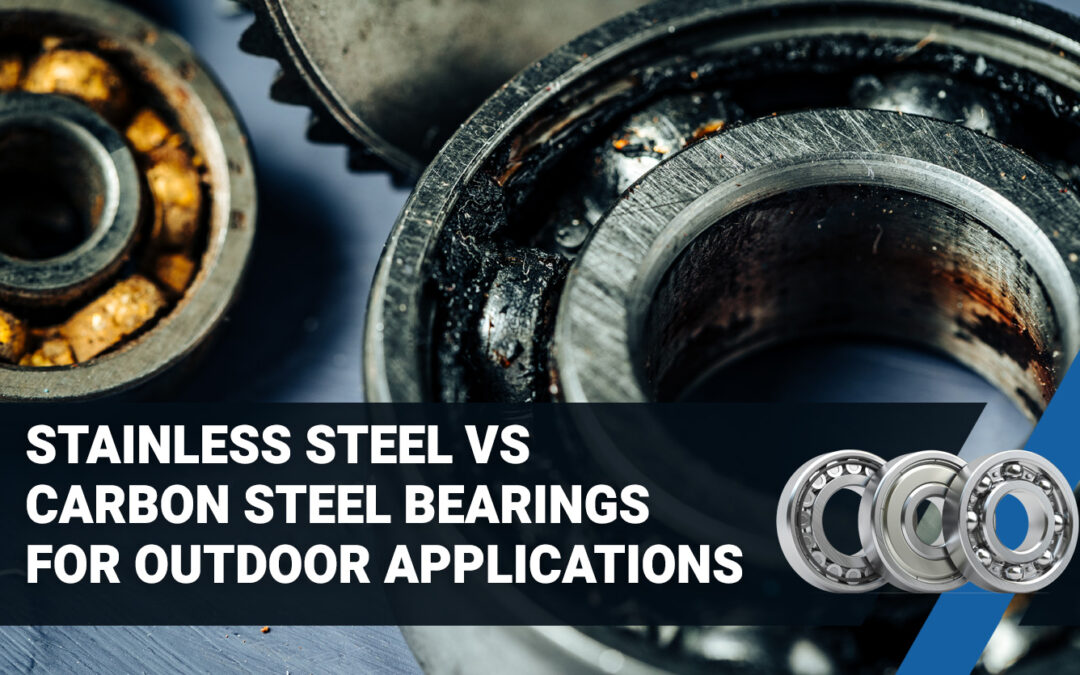
Bearings are one of the most critical components in mechanical systems. Whether used in industrial equipment, commercial vehicles, conveyors, or agricultural machinery, bearings allow moving components to operate smoothly while supporting load and minimizing friction. However, when equipment is exposed to outdoor environments, corrosion becomes one of the most common causes of bearing failure.
Moisture, humidity, road salt, chemicals, and temperature fluctuations can rapidly deteriorate traditional bearing materials. Over time, corrosion damages precision surfaces, contaminates lubrication, and ultimately leads to premature failure. For engineers and procurement professionals responsible for equipment reliability, choosing the right bearing material is essential for long-term performance.
One of the most common questions in outdoor applications is whether to use standard carbon steel bearings or upgrade to stainless steel bearings. Each material offers advantages depending on the operating environment, load requirements, and total cost considerations. If your team is sourcing for harsh environments, Mechanical Power’s bearing product category and global sourcing services can help identify a cost-effective solution for your application.
How Corrosion Damages Standard Bearings
Standard bearings are typically manufactured from high-carbon chromium steel such as 52100 alloy steel. This material provides excellent strength, hardness, and fatigue resistance, which is why it is widely used in industrial bearing applications.
However, carbon steel is vulnerable to corrosion when exposed to moisture and oxygen. Rust formation on the bearing raceways can create surface irregularities that increase friction and reduce operating efficiency. Over time, corrosion pits can develop into structural defects that weaken the bearing and shorten its service life.
In addition, corrosion can contaminate lubricants inside the bearing. When rust particles mix with grease, they accelerate wear and degrade lubrication performance. As lubrication breaks down, friction increases, which can lead to overheating and early failure. For more background, see MPI’s related article on common causes of bearing failure.

When Stainless Steel Bearings Are Recommended
Stainless steel bearings are often selected for applications where corrosion resistance is a priority. Stainless steel alloys contain chromium, which forms a protective oxide layer that resists rust formation.
Outdoor equipment is one of the most common use cases for stainless steel bearings. Agricultural machinery, industrial machinery, material handling systems, and vehicle-mounted mechanisms are frequently exposed to rain, humidity, and debris. In these environments, stainless steel bearings can provide improved durability and reduced maintenance.
Marine environments represent another scenario where stainless steel bearings are essential. Saltwater exposure accelerates corrosion significantly, and stainless materials help prevent rust-related failures.
Washdown environments such as food processing, pharmaceutical manufacturing, and chemical processing also benefit from stainless steel bearings. Equipment in these industries must frequently be cleaned with water or chemicals, making corrosion-resistant materials critical for reliability. Similar considerations may also apply in packaging equipment and conveyor systems where uptime and cleanliness are critical.
Comparing Stainless Steel and Carbon Steel Bearings
When evaluating bearing materials, engineers typically compare several key factors:
- Corrosion resistance
- Load capacity
- Maintenance requirements
- Initial cost
- Lifecycle value
Carbon steel bearings offer higher hardness and load capacity compared to many stainless grades. They are also significantly more cost-effective and widely available across standard bearing sizes.
Stainless steel bearings provide superior corrosion resistance but usually come at a higher price. Depending on the grade, stainless bearings may also have slightly lower load capacity compared to hardened carbon steel bearings.
For many outdoor applications, the decision is not always straightforward. In some cases, properly sealed carbon steel bearings can perform reliably while offering significant cost savings. In other applications with severe exposure to moisture or chemicals, stainless steel may be the better long-term solution.
Mechanical Power supports a broad range of bearing and motion-related product categories beyond standard bearings, including gearboxes, power transmission chains, pulleys, sprockets, hydraulic components, and custom assemblies, which can be helpful when evaluating the full system rather than a single component in isolation.
Common Stainless Steel Bearing Grades
Two of the most commonly used stainless steel materials for bearings are 440C and 304 stainless steel.
- 440C stainless steel is the most widely used stainless grade for bearing components. It provides a combination of corrosion resistance, hardness, and strength that makes it suitable for many industrial applications.
- 304 stainless steel offers even higher corrosion resistance but lower hardness. Because of its reduced load capacity, it is typically used in lighter-duty applications or in housings rather than the bearing races themselves.
If your application requires technical support beyond a standard catalog part, MPI’s reverse engineering services can help identify equivalent or optimized solutions for legacy or custom assemblies.
Additional Corrosion Protection Options
Before converting to stainless steel bearings, engineers should also consider additional methods of corrosion protection. Sealed or shielded bearings can significantly reduce moisture intrusion and protect internal components.
Protective coatings applied to bearing surfaces may also improve corrosion resistance. In some applications, corrosion-resistant lubricants can extend bearing life in harsh environments.
Another option is to use corrosion-resistant housings or tracks that reduce the risk of material interaction and surface damage. Hybrid solutions combining carbon steel bearings with protective housings can sometimes deliver the best balance between performance and cost.
Depending on the application, supporting categories such as hydraulic cylinders, fasteners, CNC machining, assemblies, and plastic molded parts may also play a role in corrosion control and system design.
Did You Know?
For more than forty years Mechanical Power has been supplying high-quality bearings at competitive prices from around the world.
Maximize efficiency of your equipment.
Making the Right Material Decision
Selecting the correct bearing material ultimately requires evaluating the operating environment, load requirements, and expected lifecycle costs. Stainless steel bearings provide excellent corrosion protection but often come with higher initial costs.
For many applications, working with an experienced supplier can help identify whether a stainless upgrade is truly necessary or whether alternative protective measures can deliver similar performance.
Mechanical Power works closely with OEM engineers and procurement teams to analyze application conditions, recommend appropriate bearing materials, and identify cost-effective sourcing solutions. Through services such as Global Sourcing, Inventory Management, Reverse Engineering, and broader supply chain support, MPI helps customers improve equipment reliability while controlling overall component costs.
If you are evaluating stainless steel vs. carbon steel bearings for an outdoor application, visit our Bearings category page, explore our industries we serve, or request a quote to discuss your application with our team.

Daniel Szwed – Sr. Marketing Manager
Mechanical Power, Inc.