
Here’s what we’ll cover:
What Is Industrial Kitting?
Why Complex Assemblies Create Manufacturing Challenges
Step 1: Reviewing the Bill of Materials
Step 2: Receiving and Verifying Components
Step 3: Organizing Production-Ready Kits
Step 4: Final Assembly, Packaging & Shipping
The Benefits of Industrial Kitting
Industries That Benefit from Kitting
Why Manufacturers Choose Mechanical Power
Frequently Asked Questions
Introduction
In today’s manufacturing environment, efficiency isn’t just measured by how quickly products are assembled—it’s measured by how effectively every component reaches the production floor.
For many OEMs and industrial manufacturers, a single assembly may require dozens of individual parts sourced from multiple suppliers. Bearings, fasteners, shafts, seals, housings, spacers, and hardware all have to arrive on time, in the correct quantities, and ready for installation. If even one component is missing, production can slow to a halt.
This is where industrial kitting services make a measurable difference.
Rather than managing dozens of purchase orders, shipments, and inventory locations, manufacturers receive a single production-ready kit containing every component required for assembly. The result is a more streamlined workflow, improved inventory accuracy, and reduced labor throughout the manufacturing process.
At Mechanical Power, our kitting and assembly team works closely with customers to transform complex bills of materials into organized, quality-verified kits that are ready for immediate use.
What Is Industrial Kitting?
Industrial kitting is the process of collecting, organizing, verifying, and packaging all components required for a specific assembly into a single, production-ready package.
Instead of ordering and managing dozens of individual parts separately, manufacturers receive one complete kit built according to their bill of materials (BOM).
Each kit is carefully prepared to include:
- Bearings
- Fasteners
- Shafts
- Bushings
- Seals
- Hardware
- Specialty components
- Custom packaging and labeling
Because every component has already been verified, production teams spend less time searching for parts and more time assembling finished products.
Why Complex Assemblies Create Manufacturing Challenges
As products become more sophisticated, so do their assemblies.
A single machine may contain dozens—or even hundreds—of components originating from multiple suppliers around the world. Managing these parts individually introduces several challenges.
Multiple Suppliers
Purchasing departments often manage numerous vendors for one assembly. This means multiple purchase orders, multiple invoices, multiple deliveries, and increased administrative work.
Inventory Complexity
Receiving and storing individual components requires warehouse space, inventory tracking, and ongoing cycle counting.
Without careful management, manufacturers risk:
- Missing parts
- Overstocking
- Duplicate inventory
- Incorrect revisions
- Obsolete components
- Production Delays
Production schedules depend on every component arriving when needed.
If one bearing, fastener, or seal is delayed, an entire assembly line may stop while waiting for a single missing part.
Step 1: Reviewing the Bill of Materials
Every successful kitting project begins with understanding the customer’s Bill of Materials (BOM).
Mechanical Power reviews each BOM to determine:
- Required components
- Quantities
- Approved manufacturers
- Packaging requirements
- Assembly sequence
- Delivery schedules
Our sourcing specialists consolidate components from trusted suppliers into one coordinated procurement process.
Instead of customers managing multiple vendors, Mechanical Power becomes a single point of contact responsible for sourcing, inventory, and kit preparation.
Step 2: Receiving and Verifying Components
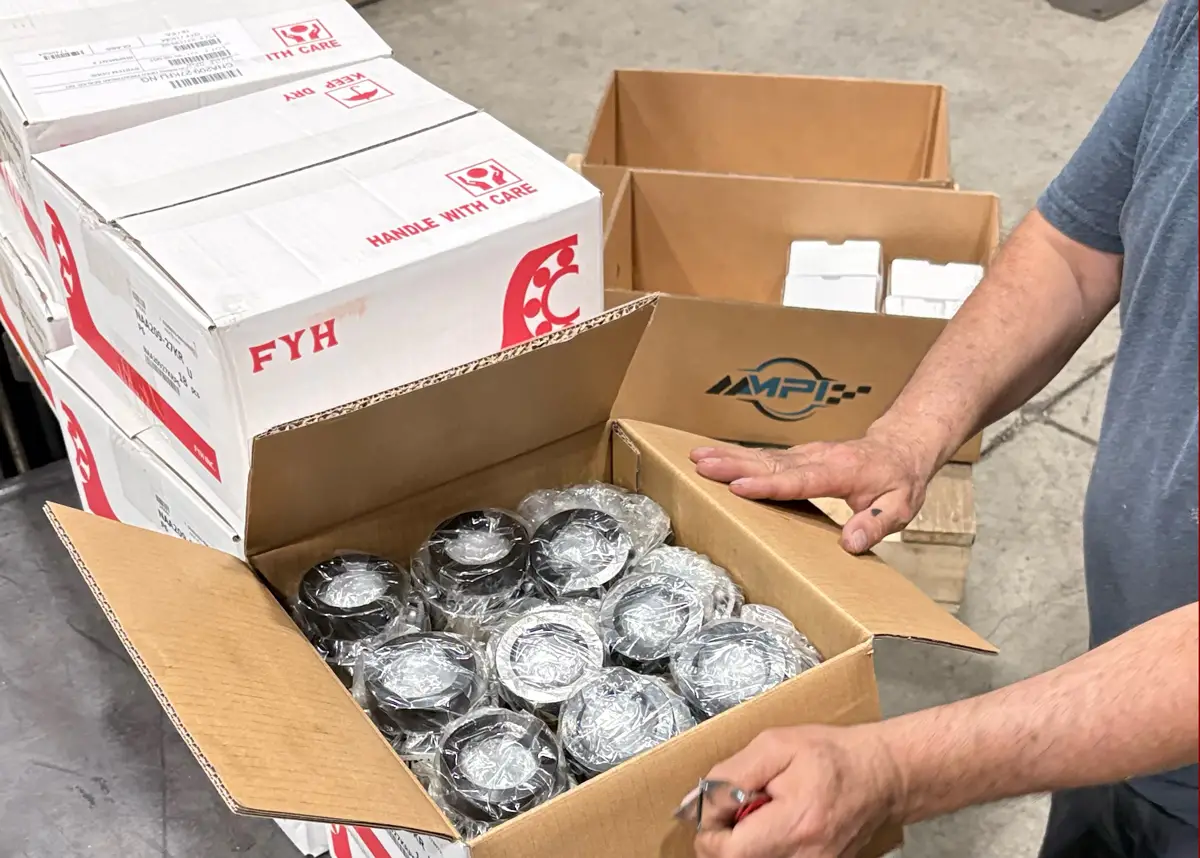
Once components arrive at our facility, every shipment undergoes verification before entering the kitting process.
Incoming materials are checked for:
- Correct quantities
- Product condition
- Part numbers
- Supplier accuracy
- Packaging integrity
This quality verification helps identify discrepancies before kits reach the customer, reducing the risk of production interruptions.
By catching potential issues early, manufacturers avoid discovering missing or incorrect parts after production has already begun.
Step 3: Organizing Production-Ready Kits
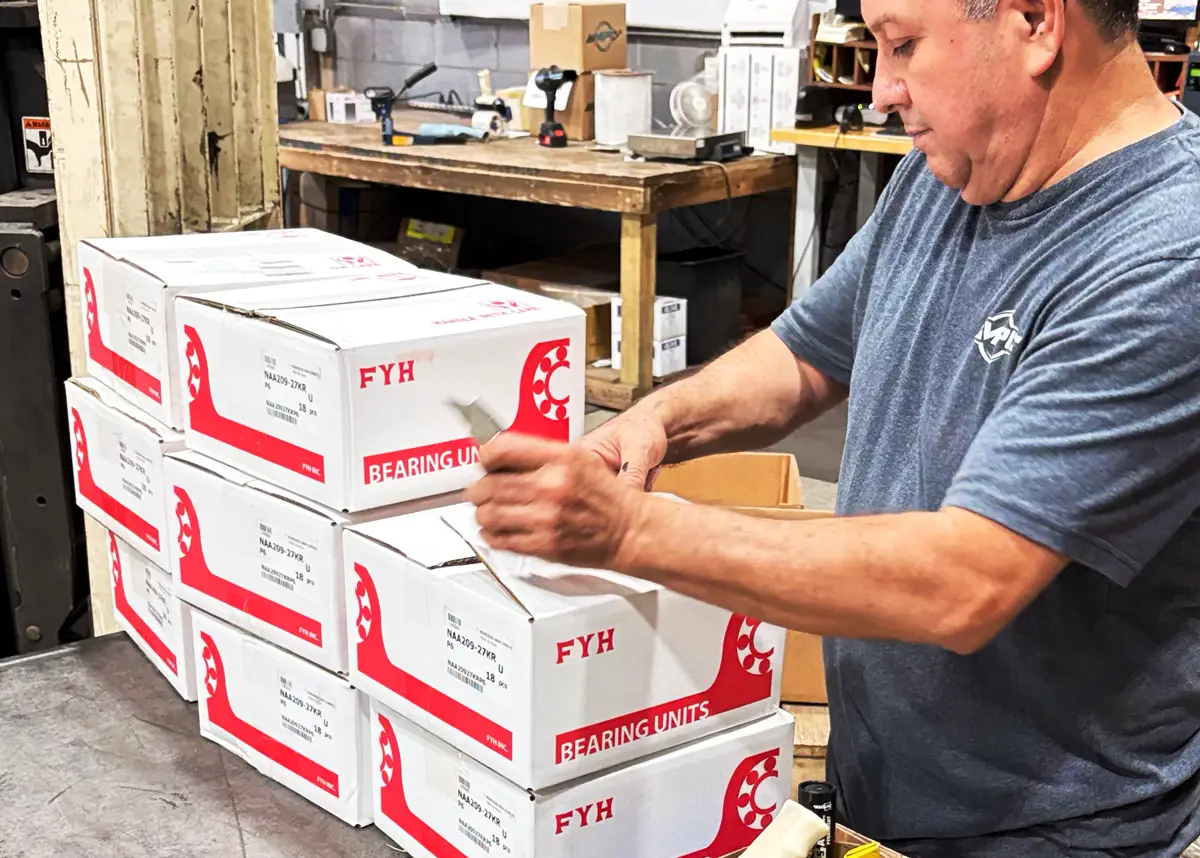
After inspection, components are organized into production-ready kits according to the customer’s specifications.
Each kit is carefully arranged to simplify assembly and improve handling on the production floor.
Depending on the application, kits may include:
- Individually separated components
- Protective packaging
- Custom compartment trays
- Labels for easy identification
- Assembly-specific quantities
- Sequential packaging
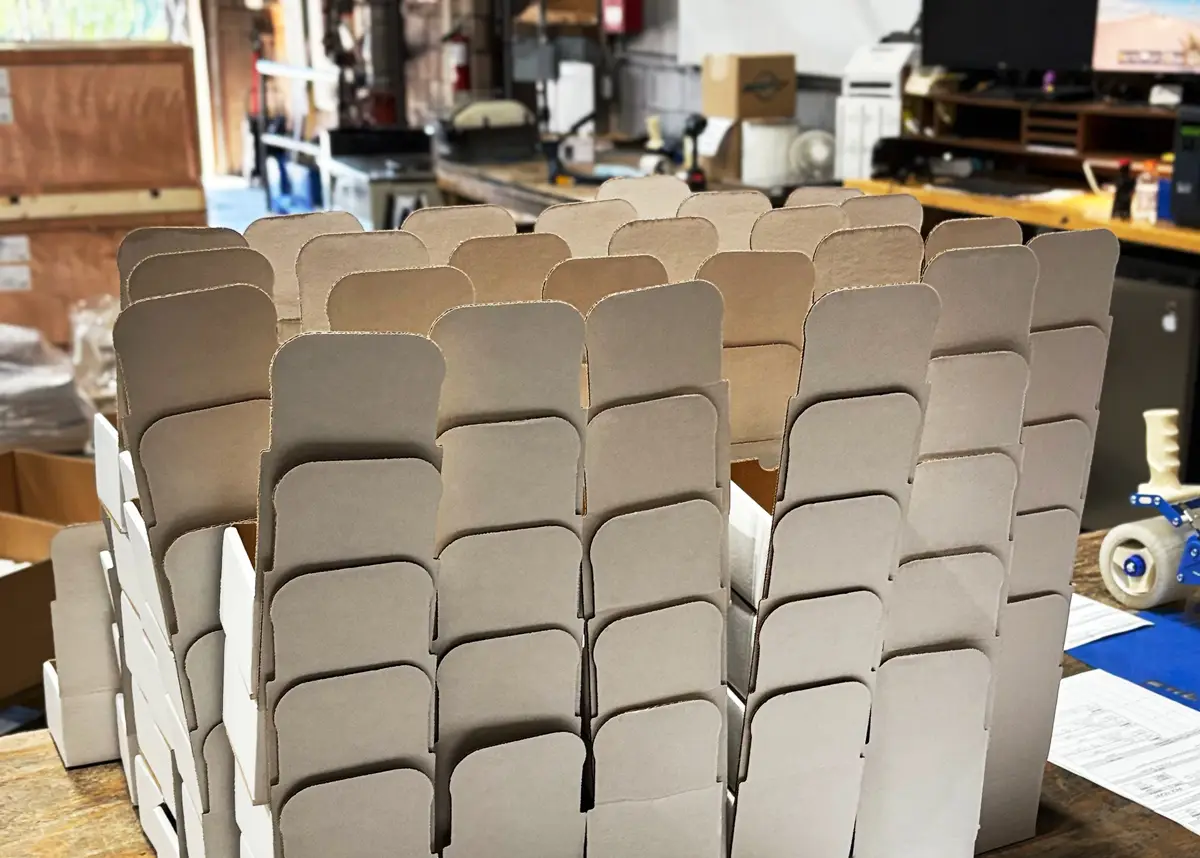
Organized packaging minimizes picking errors while helping technicians quickly locate the parts they need.
Instead of sorting through multiple boxes, everything required for assembly arrives together.
Step 4: Final Assembly, Packaging & Shipping
Before shipment, every completed kit undergoes a final verification process.
Mechanical Power confirms:
- Component quantities
- Packaging accuracy
- Labeling
- Documentation
- Customer-specific requirements
Completed kits are then packaged for shipment and delivered production-ready.
Whether supporting scheduled manufacturing runs or replacement part programs, our goal is to simplify receiving and reduce handling once products arrive at the customer’s facility.
Did You Know?
For more than forty years Mechanical Power has been supplying high-quality sprockets at competitive prices from around the world.
Maximize efficiency of your equipment.
The Benefits of Industrial Kitting
Industrial kitting provides value throughout the manufacturing process—not just on the assembly line.
Reduced Procurement Complexity
Working with one supplier instead of several simplifies purchasing while reducing administrative workload.
Improved Inventory Accuracy
Pre-counted, verified kits minimize inventory discrepancies and reduce warehouse handling.
Faster Assembly
Production teams spend less time locating parts and more time assembling finished products.
Lower Labor Costs
Organized kits reduce manual sorting, counting, and inventory management activities.
Improved Quality
Incoming inspections and final verification help ensure complete, accurate kits before shipment.
Better Production Scheduling
Receiving complete kits instead of individual components helps maintain predictable production schedules and reduces downtime caused by missing parts.
Industries That Benefit from Kitting
Industrial kitting is valuable across a wide range of industries, including:
- Industrial machinery
- Power transmission equipment
- Agricultural equipment
- Material handling systems
- Packaging machinery
- Automation equipment
- OEM manufacturing
- Maintenance and repair operations
Whether building new equipment or supporting aftermarket service programs, production-ready kits simplify operations throughout the supply chain.
Why Manufacturers Choose Mechanical Power
Mechanical Power combines sourcing expertise, inventory management, and value-added assembly services to help manufacturers improve operational efficiency.
Our capabilities include:
- Custom kitting
- Mechanical assembly
- Global sourcing
- Bill of Materials management
- Inventory programs
- Custom packaging
- Component consolidation
- Quality inspection
- Production-ready delivery
Rather than simply supplying parts, we help manufacturers reduce complexity throughout the procurement and assembly process.
From sourcing components to preparing complete production kits, our team works as an extension of your manufacturing operation.
| Traditional Purchasing | Mechanical Power Kitting |
|---|---|
| Multiple suppliers | Single sourcing partner |
| Numerous purchase orders | One coordinated order |
| Multiple shipments | Consolidated delivery |
| Manual sorting | Production-ready kits |
| Increased inventory handling | Simplified inventory management |
| Higher risk of missing parts | Quality-verified components |
| Longer assembly preparation | Faster production starts |
Conclusion
Managing complex assemblies doesn’t have to mean managing dozens of suppliers, multiple shipments, and countless individual components.
Industrial kitting transforms the way manufacturers receive and assemble products by delivering organized, production-ready kits that improve efficiency from receiving through final assembly.
By consolidating sourcing, verifying component accuracy, and packaging assemblies according to each customer’s bill of materials, Mechanical Power helps manufacturers reduce labor, improve inventory accuracy, and keep production moving.
If you’re looking to simplify your assembly process, reduce procurement complexity, or improve production efficiency, our kitting and assembly team is ready to help.
Contact Mechanical Power today to learn how our custom industrial kitting services can support your next project.
How Can MPI Help You?
We can supply all of your Industrial Parts.
Click the RFQ button, email us at [email protected]
or call us at 847.487.0070 for more information.

Frequently Asked Questions
What is the difference between kitting and assembly?
What are industrial kitting services?
How does kitting reduce manufacturing costs?
Can production kits be customized?
Which industries benefit most from industrial kitting?

Daniel Szwed – Marketing Manager
Mechanical Power, Inc.